


 Buy tickets
 Buy tickets
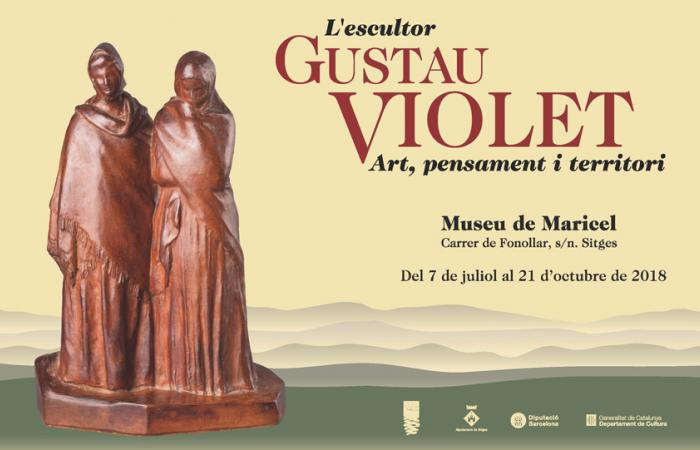
‘The sculptor Gustau Violet: art, thought and territory’
6 July 2018 to 21 October 2018
Museo Maricel (Sitges)
Horario: De martes a domingo, de 10 a 20 horas.
Comisarios: Ignasi Domènech y Ester Barón
Organiza: Museos de Sitges, con la colaboración del Ayuntamiento de Sitges, la Diputación de Barcelona y la Generalitat de Catalunya
Precios: 5 - 10 € (entrada conjunta para visitar el Cau Ferrat y el Museo Maricel)
Consulta todas las obras de la exposición
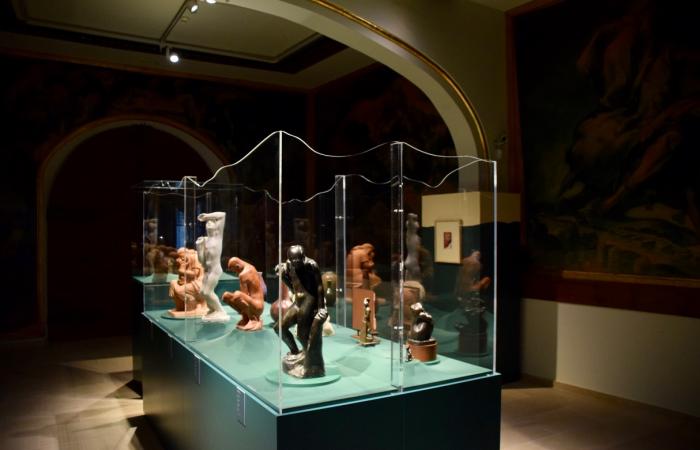
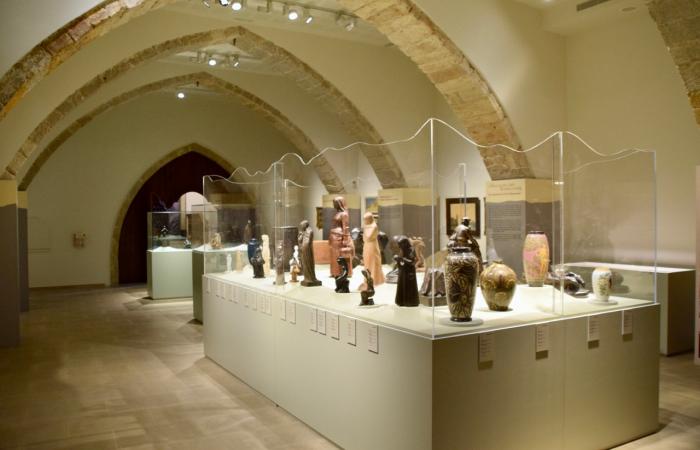
Los Museos de Sitges recuperan y reivindican la obra y la condición de un artista transfronterizo, el escultor Gustau Violet (Tuïr, 1873 - Perpiñán, 1952), con una completa exposición que reúne 104 piezas de autores suyos y contemporáneos en el Museo Maricel hasta el 21 de octubre. La exposición El escultor Gustau Violet: arte, pensamiento y territorio permite presentar una visión de su creatividad avanzada y moderna, así como de su mirada al territorio, crucial en la configuración de su obra. La exposición está organizada por los Museos de Sitges, con la colaboración del Ayuntamiento de Sitges, la Generalitat de Cataluña y la Diputación de Barcelona. Sus comisarios son Ignasi Domènech , jefe de colecciones de los Museos de Sitges, y la historiadora del arte Ester Barón.
The exhibition Gustau Violet: art, thought and territory shows the relationship between the artists of the Rosselló and the Principality at the beginning of the 20th century, from the figure of Violet himself, who acted as a common nexus and path of influence. Violet represented modernity and links with the territory at the same time, as an introducer of some Aesthetic ideas that gave shape to a plastic art that was advanced to that of Noucentisme, the vindication of an art based on traditional forms and the integration into the same cultural corpus of the Catalunyes of the North and the South.
Having completed his studies in Paris, he briefly worked as an architect and participated as a sculptor in 1903 and 1907 as a sculptor at various exhibitions at the Salon des Artistes and the Salon d'Autome, from which he began to be recognized by the critics. Distanced from the aesthetic canons of Rodin, he did not find his fit in the art circuits of the French capital and soon (in 1903) he returned to Roussillon, where he established strong ties with people, culture, landscape and traditions of northern Catalonia, without losing its ties with Paris. In 1907 he published a manifesto in defense of regional art, where he held as an art based on his people, landscape and traditions.
The exhibition The sculptor Gustau Violet: art, thought and territory presents works never seen before in the Principality and offers a picture of the modernity that represented the sculpture of Violet in the context of the Rossellonian art of its time. At the beginning of the century, Rosselló became a true laboratory of artistic experimentation in which Gustau Violet played a key role, but also had other important elements, such as the arrival of Henri Matisse in Cotlliure, the Invitation by Aristides Maillol to artists from different cultures in Banyuls, the birth of Fauvism or the imminent appearance of Ceret as the birthplace of Cubism.
The exhibition presented by the Maricel Museum is the most complete sample of the Rossellonian art from the beginning of the 20th century seen in Catalonia since Miquel Utrillo organized in Sala Parés de Barcelona in 1905 the Exhibition of Artists from Rosselló . In the Sitges exhibition, the works of Gustau Violet coexist with others of Artistides Maillol, Paul Gauguin, Manolo Hugué, Esteve Terrús, Lluís Bausil, Marcel Giri or George-Daniel de Monfreid, among others.
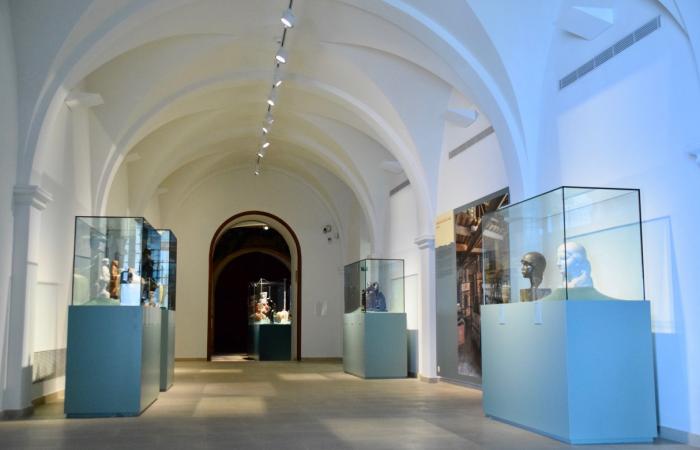
The exhibition The sculptor Gustau Violet: art, thought and territory presents 104 works from different collections, such as the Musee d'Art et d'Histoire de Narbonne, the National Museum of Art of Catalonia (MNAC), the Barcelona Design Museum, the Art Museum of Sabadell, the Museu d'Art Jaume Morera (Lleida), the Museu Terrús d'Elna, the Library - Museu Víctor Balaguer de Vilanova i la Geltrú and the same Cau Ferrat and Museu de Maricel, among others. The sample has also received loans from archives, libraries, art galleries and private collections. Both curators, Ignasi Domènech and Ester Baron, have carried out an intense research task, which has led to the unveiling of unknown works, which are now added to the Maricel Museum.
Catalog The sculptor Gustau Violet: art, thought and territory
Edit: Sitges Heritage Consortium, 2018
Coordination: Ignasi Domènech
Texts: Ester Barón, August Bover, Ignasi Doménech and Eric Forcada
Supporting documentation Carme Camps and Elisenda Casanova
Gustau Violet
Gustau Violet (Tuïr, 1873 - Perpignan, 1952) studied architecture at the Beaux-Arts Academy in Paris, although he mainly worked as a sculptor. He explored, however, other artistic disciplines, such as illustration, forge, ceramic creation, furniture design, as well as translation and writing.
Gustau Violet was one of the most important emerging sculptors in Paris in the early twentieth century and, at the same time, was one of the most committed and meaningful artists with Catalan culture in Roussillon. He worked stone, marble, copper and clay. His work is featured in prominent French and Catalan museums, but also in public spaces, such as the monument -wrought sculpture, mosaic and wrought iron- which rose to Perpignan in 1924 in tribute to the people who had fallen into World War I , as well as other sculptural decorations at the Superior School of Perpignan. He was also the creator, together with the sculptor Miquel Paredes, of the monuments to the dead of the Great War in Tuïr, Collioure, Sant Llorenç de Cerdans and Prada.
Violet, who rarely signed his works, was a great supporter of the anonymity of the craftsmanship and the creation of an art for all. In this sense, most of his works were serial, with a limited number of copies. His terracotta figures with patina were inspired by field work and peasant life and represented the popular types of Rosselló, Cerdanya and Conflent.
Conocedor de la dramaturgia catalana, promovió el teatro de la naturaleza en el Rosellón y tradujo al francés La gente gris de Santiago Rusiñol, con quien compartió experiencias e intercambios artísticos, como un viaje a La Mancha en 1905 para conmemorar el tricentenario del Quijote o la exposición en la Galerie Goerges Pêtit de París (1906), donde Rusiñol presentó dieciséis óleos y Violet diecinueve esculturas. También escribió, junto con Josep Sebastià Pons, La font de l'Albera , interpretada por Enric Morera.
Gustau Violet en los Museos de Sitges
Los Museos de Sitges cuentan con cuatro obras de Gustau Violet en sus colecciones. Santiago Rusiñol adquirió dos esculturas de Violeta con un toque novecentista (Los portadores de naranjas y Mujer peinándose ), fruto de la amistad que ambos forjaron a principios de siglo. Simultáneamente, Charles Deering también adquirió dieciocho esculturas para su colección, aunque no permanecieron en la colección del Palacio de Maricel.
Precisamente, Gustau Violeta iba a ser el autor de la decoración escultórica de la fachada de Maricel, una propuesta que le hizo Miquel Utrillo con motivo de la visita a las obras que el artista rossellónico realizó en 1914. Su llamada a filas con el ejército francés, nada más estallar la Gran Guerra, hizo que Violeta detuviera el encargo que finalmente asumió Pere Jou.
Obras de Gustau Violet en el Cau Ferrat y el Museo de Maricel:
Los portadores de naranjas (1905), escultura de terracota patinada. Colección Santiago Rusiñol (Cau Ferrat).
- Mujer peinándose (1905-11), escultura de terracota con pátina Colección Santiago Rusiñol (Cau Ferrat)
- Miquel Utrillo recibiendo la Legión de Honor (1918-19), jarrón de cerámica esmaltada. Colección del Dr. Jesús Pérez - Rosales (Museo Maricel)
Busto de Juli de Carsalade du Pont, obispo de Elna (c. 1905), escultura de terracota. Colección Maricel (Museo Maricel). Esta obra fue adquirida recientemente por el Consorcio del Patrimonio de Sitges.


