


 Buy tickets
 Buy tickets
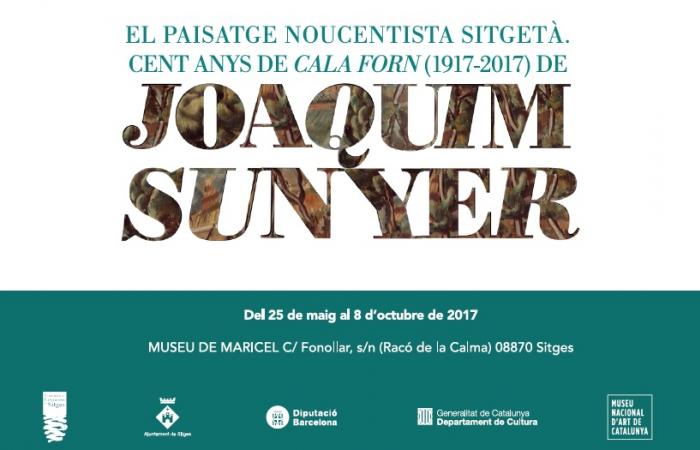
‘El paisatge noucentista sitgetà. Cent anys de «Cala Forn»’
Museu de Maricel de Sitges
25 May 2017 to 1 November 2017
Lugar: Sala Sert del Museo de Maricel.
Precio: 10 € (con acceso al Cau Ferrat y al Museo de Maricel).
Horario:
- Abril, mayo, junio y octubre: de martes a domingo, de 10:00 a 19:00 h.
- Julio y agosto: de martes a domingo, de 10:00 a 20:00 h.
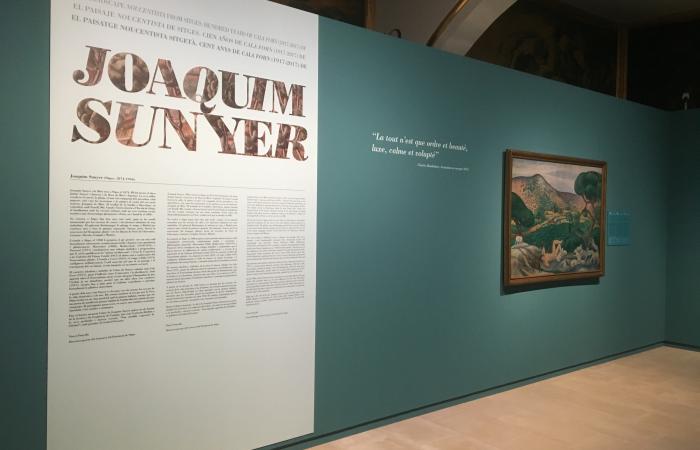
El Museo Maricel inauguró una sala dedicada a Joaquim Sunyer, con motivo del centenario de uno de sus óleos más emblemáticos, Cala del Horno (1917). El Museo Nacional de Arte de Cataluña (MNAC), con esta obra en su colección, cede hasta octubre la visita a esta sala, ubicada en la Sala Sert del Museo Maricel. Cala del Horno, Joaquim Sunyer completa la síntesis de clasicismo, idealismo y humanización. Es una obra que representa la plenitud del artista.
La instalación paisajística «Sitges Novecentista. Cien años de Cala Oven», de Joaquim Sunyer, presentó esta obra y tres obras cedidas por el Museo Nacional, el Archivo Joan Maragall y la Galería Dolors Junyent.
Joaquim Sunyer (Sitges, 1874- 1956)
(Texto del Vinyet Panyella)
Joaquim Sunyer i de Miró nació en Sitges en 1874, hijo del maestro de obras Jaume Juncosa Sunyer y Rosa Miró i Argenter. Su mejor escuela fueron la calle, la playa, el mar y la compañía de pescadores y agricultores, así como sus incursiones en la pintura con su tío materno, Joaquim de Miró. La familia se trasladó a Barcelona, donde conoció a Nonell, Mir, Canals y Torres-García en la Escuela de Llotja. Se familiarizó con escenas urbanas y ciertos temas sociales que desarrolló plenamente en París, donde se instaló en 1896.
He does not return to Sitges until ten years later, when he had reached certain name thanks to street scenes and interiors with a symbolist intimate stroke. The gallery pays Barbazanges will travel to Madrid to learn more Spanish painting. Sunyer, however, drifts the renewal of artistic language towards the lessons of Puvis de Chavannes, Cézanne, Derain, Gauguin and Matisse.
The stay in Sitges in 1908 promotes a turn towards a formally structured, thematically new and conceptually and artistically refined pictorial style. Maternity (Motherhood) (1908), Mediterrània (Mediterranean) (1910-1911) and Pastoral (1911) constitute a programmatic and symbolic trilogy that earned him the status of "Mediterranean painter, and the success of the exhibition in the galleries of Faianç Català (1911) place him as leader of plastic Noucentisme. The stay in Ceret (1912) and the trip to Italy (1913) finally configure Sunyer's style in respect to landscape and the treatment of the human body, often built in the same stage.
The idealistic and symbolic character of the work of Sunyer culminate with Cala Forn (1917), a turning point between the structure and idealization. With this work, Noucentisme attained the highest degree of humanization that the artist will never leave, while in another work, Les cosidores (1917) shows how Cubism contributes to formally articulate Sunyer's plasticity.
Beginning at the twenties Sunyer opts towards portraits, scenes of domestic life and nudes. The portraits show his way through the New Objectivity in a clear parallel with Italian painting, while nudes demonstrate the strong vitality of the artist until well into the fifties. The landscape becomes, instead, a casual theme, linked to his mountain forays.
Until the last moment, Joaquim Sunyer's work reveals a high technical mastery and motivation of the artist, as well as the extreme loyalty to his deep and sincere commitment. "An accomplished expression of happiness," in the words of Gabriel Ferrater.
Cala Forn and the landscape by Sunyer
The exhibition represents the staging of the landscape of Sitges idealized by Joaquim Sunyer in the early twentieth century, concentrated in four paintings. With Cala Forn, Sunyer culminates the synthesis of classicism, idealism and humanization. It is a work that represents the fullness of the artist and the absolute humanization of the ideal landscape drawn by Noucentisme. The ideal landscape becomes human in a conciliatory synthesis that marks a turning point in the evolution of the artist where the treatment of the human figure reaches a high level of purification, simplicity and plausibility that become assimilated with the portrait, a way that Sunyer has not stopped practicing and that starts with more forece from this passage.
Sunyer's landscapes insist on a compositional idea of the rural landscape without concessions to the topic of the most famous images. The choice of sites that were unknown so far as pictorial matter involves the plastic expansion of local geography, that the artist works with insistence. Places like the hollows of Picorb or the sights of Clot dels Frares, the Riera de Ribes and Miralpeix consolidates Sunyer's landscapes throughout the twenties of the twentieth century.
At that time, the strength of the landscape dissolves itself and is replaced by another look, quite evident in the portraits, the nudes and family scenes within the common narrative of the New Objectivity.. From 1928 to 1938 becames "the head guide of Catalan painting."
The Sert Hall in the Maricel
The area chosen by the Museums of Sitges to accommodate the installation is not accidental: the Sert Hall of the Maricel Museum is composed by eight paintings by Josep Maria Sert made in 1916 on the occasion of the Great War allowing to frame Sunyer in his chronology, but in a radically different context. The Sert Hall once accomodated the exhibition Ramon Casas, a long yearned modernity, a spece to the Poètica de les multitud (Poetics of the crowds), which, among other works, there was an oil dedicated to the Sortida de la processó de de Santa Maria del Mar (1896 MNAC).
Other works by Sunyer at the Museums of Sitges
The Maricel Museum has three oil paintings by Joaquim Sunyer, two of which belong to the Art Collection of the City of Sitges and Maricel Collection.. The collections of the Heritage Consortium of Sitges also added another Sunyer from Can Falç. The Maricel Museum currently has four works donated by the external collections.
- Motherhood (1908), Maricel Museum (Art Collection of the City)
- Amadeus (1923), Maricel Museum (Art Collection of the City)
- Portrait of Montserrat Gorgas i Ferrer (1930), Museu Maricel (Maricel Fund)
- Dona (Women) (1919), Can Falc (Funds of Can Falç de Mar, Reserva)
- Les germanes Ribas (Ribas Sisters) (1913), Maricel Museum (MNAC Fund), now at the temporary exhibition of the Morera Museum in Llleida;
- Les dues cotorres (The two parrots) (1017), Maricel Museum (MNAC deposit)
- L'oriol (The oriole) (1911), Maricel Museum (MNAC Deposits)
- Retrat del poeta Trinitat Catasús (1916), Private collection. Temporary diposit Maricel Museum
Obras en préstamo para la instalación
- Cala Forn (1917), Préstamo del Museo Nacional de Arte de Cataluña
- Pastoral (1911), Préstamo de la Casa - Arxiu Joan Maragall (Generalitat de Cataluña)
- Paisaje Sitges (Paisaje de Sitges) (c. 1920), Depósito del Museo Nacional de Arte de Cataluña en el Museo de Maricel
- Paisatge de Miralpeix amb vistes a Pere Pau (sd), Préstamo Dolores Galería de Arte Junyent


